
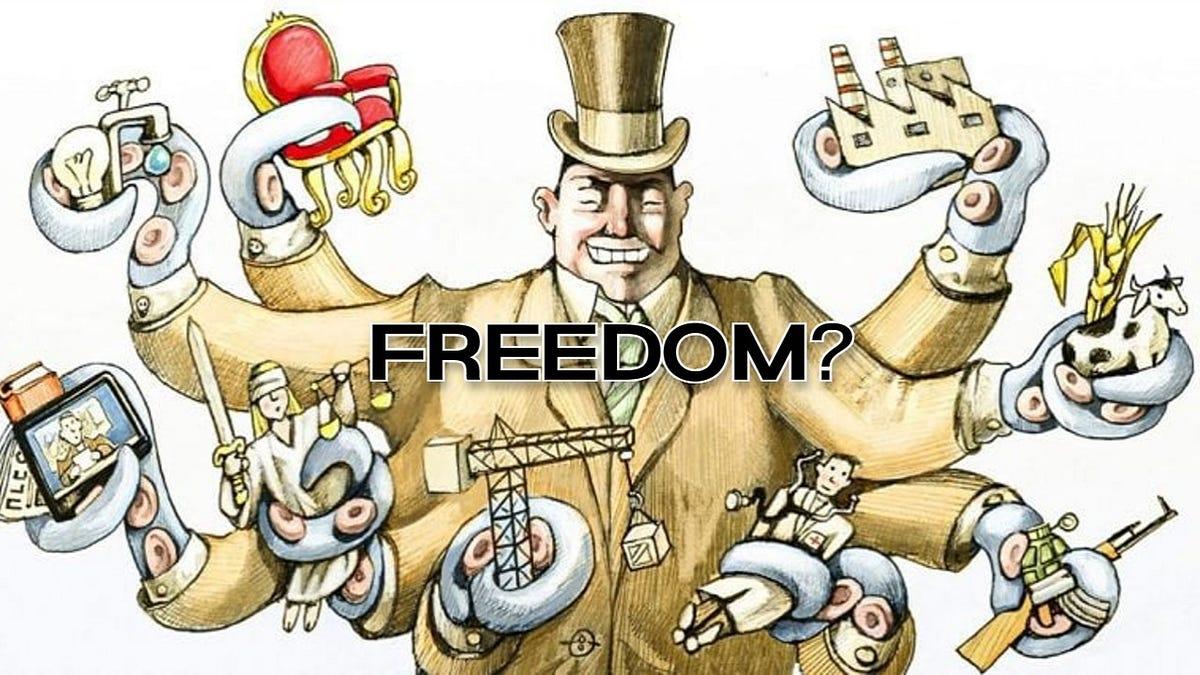
Before delving into the intricate relationship between capitalism and freedom, it is crucial to understand the foundational structure of capitalism itself. Capitalism is an economic system characterized by private ownership of the means of production, where goods and services are produced for profit in a competitive market. The central tenets include private property, capital accumulation, wage labor, voluntary exchange, a price system, and competitive markets.
Key Features of Capitalism:
- Private Property: Individuals and businesses have the right to own and use property as they see fit.
- Market Economy: Decisions regarding investment, production, and distribution are driven by market dynamics.
- Competition: Businesses compete to offer better products and services, which theoretically leads to innovation and efficiency.
By understanding these elements, you gain insight into how capitalism functions and influences various aspects of life, including personal freedom. The ability to own property and engage in commerce without undue interference is often touted as a manifestation of freedom within this system.
What is Freedom? Exploring the Concept
The concept of freedom is multifaceted and subjective, often defined by individual perspectives and societal norms. At its core, freedom involves the ability to act, speak, or think without hindrance or restraint. However, philosophical debates have long explored whether true freedom can exist in any structured society.
Dimensions of Freedom:
- Negative Freedom: The absence of obstacles, barriers, or constraints. It is often defined by what you are free from, such as oppression or coercion.
- Positive Freedom: The possibility of acting or the capacity to act upon one’s free will. It emphasizes having the power and resources to fulfill one’s potential.
Freedom is not merely about lack of constraints but also about having the opportunities to pursue personal growth and happiness. In the context of capitalism, the discussion often revolves around whether economic freedom translates into broader personal freedom or whether it creates new forms of constraint.
The Relationship Between Capitalism and Freedom
The relationship between capitalism and freedom is complex, with arguments both for and against their compatibility. Proponents argue that capitalism inherently promotes freedom through economic liberalism, allowing individuals to pursue their interests, innovate, and achieve economic mobility. The idea is that when individuals can make economic choices freely, they are also more likely to experience personal freedom.
It’s important to vivify this relationship ratiocinatively without being sententious. Understanding the intractable solipsistic nature of capitalism and the desiderium in society of those who systemically cannot be propitious because of income inequality. One must comprehend that to be incipient regardless of nescience would be operose.
To be stelliferous is often anodyne, as a society in fear could never be free.
Arguments Supporting Capitalism and Freedom:
- Economic Choice: Capitalism provides a range of choices in goods and services, empowering consumers.
- Entrepreneurial Freedom: Individuals can start businesses, innovate, and pursue careers of choice.
- Wealth Creation: Potential for upward mobility through hard work and innovation.
However, critics argue that capitalism can lead to inequality, where the concentration of wealth and power restricts freedom for those without resources. This can create disparities in access to opportunities, limiting the freedom of those at the lower end of the economic spectrum.
Milton Friedman’s Perspective on Capitalism and Freedom
Milton Friedman, a renowned economist, is a key figure in the discourse on capitalism and freedom. In his seminal work, Capitalism and Freedom, Friedman argues that economic freedom is a necessary condition for political freedom. He posits that economic arrangements play a pivotal role in shaping political and social freedom.
Friedman’s Key Perspectives:
- Economic Freedom as a Precursor to Political Freedom: Friedman contends that without economic freedom, political freedom is unsustainable.
- Role of the Free Market: He advocates for minimal government intervention, suggesting that a free market is more efficient in allocating resources.
- Individual Responsibility: The emphasis is on personal responsibility and the idea that individuals should be free to choose and bear the consequences of their actions.
Friedman’s arguments have influenced policymakers and economists worldwide, championing the idea that capitalism, through economic freedom, supports a broader spectrum of individual liberties.
A Summary of Friedman’s Key Arguments
To better understand the impact of Friedman’s work, it is essential to summarize his key arguments in Capitalism and Freedom. His thesis revolves around the interplay between economic and political freedom, suggesting that the former is a vital foundation for the latter.
Core Arguments in Capitalism and Freedom:
- Limited Government Role: Friedman advocates for a government limited to maintaining law and order, enforcing contracts, and protecting property rights.
- Monetary Policy: He emphasizes the importance of controlling inflation through monetary policy rather than government intervention.
- Educational Vouchers: Proposes the use of vouchers to increase competition and choice in education, thus promoting freedom of choice.
Friedman’s work argues that when individuals have the freedom to engage in economic activities without extensive government control, they can enjoy a greater degree of personal and political freedom.
Analyzing the Impact of Capitalism on Personal Freedom
To analyze the impact of capitalism on personal freedom, one must consider both the benefits and limitations that this economic system presents. On the one hand, capitalism has been credited with fostering innovation, economic growth, and improved living standards, which can enhance personal freedoms by providing more choices and opportunities.
Positive Impacts:
- Access to Goods and Services: A competitive market ensures a wide variety of choices for consumers.
- Job Opportunities: Economic growth under capitalism can create diverse employment opportunities, enhancing career freedom.
- Technological Innovation: Capitalism incentivizes innovation, leading to advancements that can improve quality of life and personal autonomy.
On the other hand, capitalism can also create constraints through systemic inequality and power imbalances. The concentration of wealth in the hands of a few can limit the freedoms of many, restricting access to essential resources and opportunities for those less economically privileged.
Negative Impacts:
- Economic Inequality: Disparities in wealth can lead to unequal access to education, healthcare, and other essential services.
- Exploitation of Labor: The pursuit of profit can sometimes lead to exploitative labor practices, undermining workers’ rights, and freedoms.
- Environmental Concerns: The focus on growth and profit can lead to environmental degradation, impacting the quality of life and future freedoms.
Critiques of Capitalism: Are Freedoms Compromised?
Critics of capitalism argue that while it can promote certain freedoms, it can also compromise others. The critique often focuses on the systemic issues that arise, such as inequality, exploitation, and the erosion of communal values in favor of individualism.
Common Criticisms:
- Control by Corporations: Large corporations can wield significant power, influence policies, and limit competition, which can stifle innovation and freedom of choice.
- Social Inequality: The wealth gap can create social stratification, where access to opportunities is heavily influenced by socio-economic status.
- Consumerism: The emphasis on consumption can lead to a culture where value is placed on material wealth over human connections and well-being.
These critiques highlight the dual nature of capitalism, where the freedoms it promotes can be overshadowed by the constraints it imposes, particularly on those who are economically disadvantaged.
Case Studies: Capitalism in Practice and Its Effects on Freedom
To further explore the effects of capitalism on freedom, examining real-world case studies provides valuable insights. These examples illustrate how different societies implement capitalism and its varied impact on freedom.
Study Examples:
- The United States: Known for its capitalist economy, the U.S. exemplifies both the benefits of economic freedom such as innovation and wealth creation along with the challenges of inequality and access to opportunities.
- Sweden: Embraces a mixed economy with capitalist elements, demonstrating how social welfare policies can balance economic freedom with social equality.
- China: Incorporates capitalist principles within a communist framework, highlighting the complex interplay between economic liberalization and political control.
These case studies reveal that the impact of capitalism on freedom is not uniform and can vary significantly based on how the system is implemented and regulated.
Alternatives to Capitalism: Exploring Other Economic Systems
While capitalism is the predominant economic system globally, exploring alternatives can provide insights into how different systems approach the concept of freedom. Various economic models offer distinct frameworks that prioritize various aspects of freedom and equality.
Alternative Economic Systems:
- Socialism: Focuses on collective ownership and wealth distribution, aiming for economic and social equality. It often emphasizes social welfare and communal decision-making.
- Communism: Seeks to establish a classless society where the means of production are owned collectively, promoting absolute equality and eliminating private ownership.
- Mixed Economy: Combines elements of capitalism and socialism, aiming to balance market freedom with government intervention to ensure social welfare.
Each system presents its own set of advantages and challenges, and the pursuit of freedom within these frameworks varies, reflecting different societal values and priorities.
Conclusion: Can True Freedom Exist Under Capitalism?
In conclusion, whether true freedom can exist under capitalism is a question that elicits diverse opinions and compelling arguments. There have been abundant changes since Milton Friedman wrote Capitalism and Freedom in 1962.
From The Economic Opportunity Act of 1964, the assassination of Martin Luther King Jr., in 1968, the Nixon Shock that ended the Bretton Woods System in 1971, the dot-com bubble in 2000, and the global financial crisis of 2007; capitalism is not the same at it was in 1962.
How can a society truly be free under duress of fear and fascination? Maybe freedom is a fallacy of capitalism! The continuous fight to form a balance that maximizes freedom while minimizing constraints.
Call to Action
Join the movement towards building a more sustainable Cincinnati by participating in community discussions, supporting local businesses, and prioritizing equitable principles. Together, we can create an equitable economy in Cincinnati!
For more information on Conimby contact: Dr. Robert Farris, Ed.D., at: info@conimby.org (1)513-586-6134