
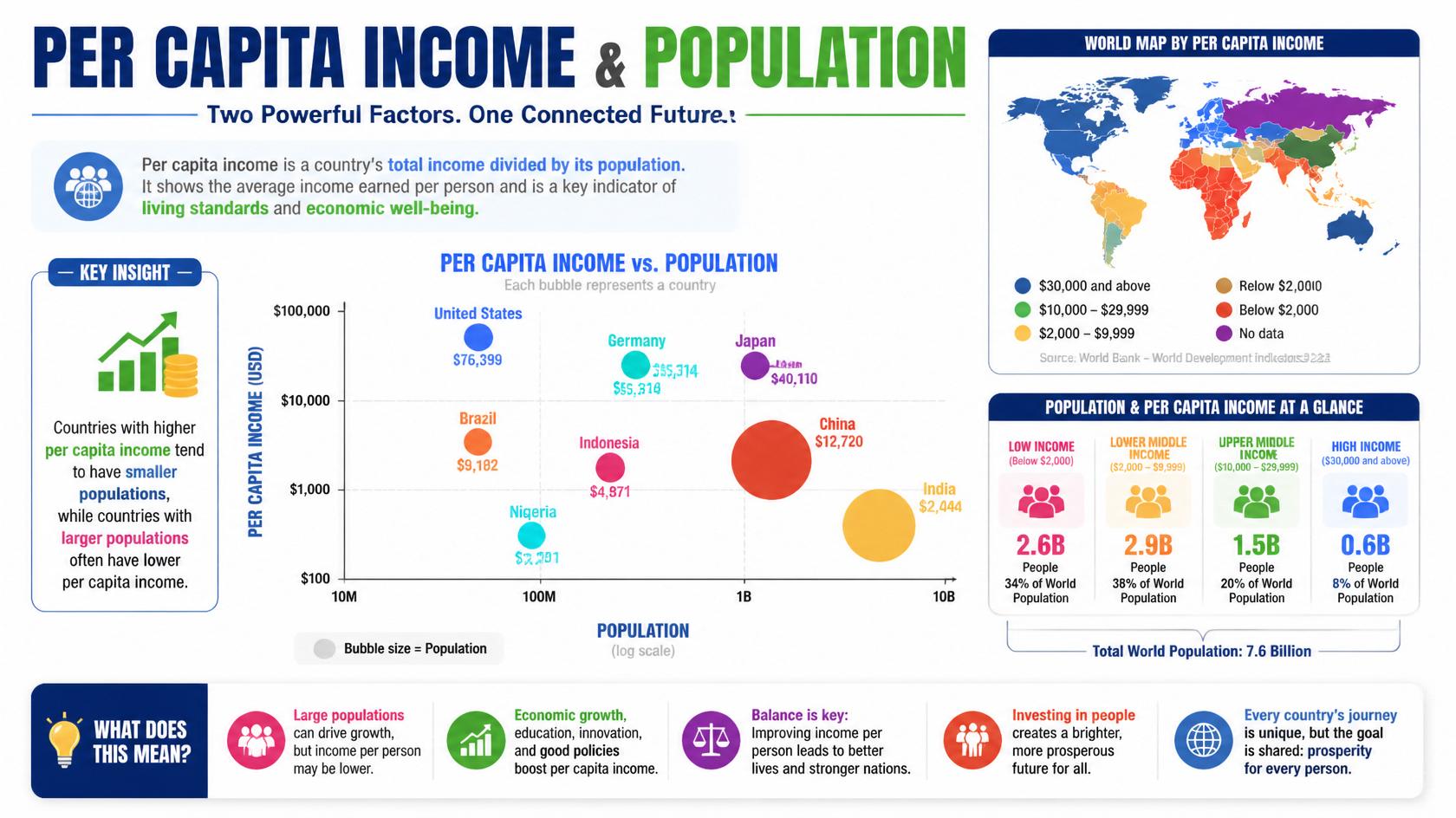
The dynamics between population growth and per capita income have intrigued economists and policymakers for decades. As you delve into this complex relationship, it is essential to recognize how these factors interact to influence economic growth and development. Understanding this relationship can provide valuable insights for shaping economic policies aimed at sustainable development.
Population growth refers to the increase in the number of people inhabiting a particular area, while per capita income is a measure of the average income earned per person within that given area. These two variables are often considered as indicators of economic health, but their relationship is not straightforward. As you explore this topic, consider how various factors such as education, employment, and urbanization play a role in shaping the economic landscape.
In this article, you will gain insights into how population growth and per capita income relate to each other. By examining case studies and analyzing economic policies, you can better comprehend the challenges and opportunities presented by these trends. This understanding is crucial for developing strategies that foster economic development and improve the quality of life for regional populations.
Understanding Population Growth
Population growth is driven by several factors, including birth rates, death rates, and migration patterns. As you examine population dynamics, it’s important to understand how these elements contribute to the overall growth rate. High birth rates often lead to rapid population growth, which can strain resources and infrastructure if not managed properly.
Migration also plays a significant role in population growth, as people move from one region to another in search of better opportunities. This movement can lead to population increases in certain areas, while others may experience population declines. Understanding these migration patterns is crucial for policymakers, as they can influence regional economic development and resource allocation.
It’s also important to consider the demographic transition model, which explains how populations move through different stages of growth. As regions develop economically, they typically experience a shift from high birth and death rates to lower birth and death rates, resulting in slower population growth. This transition can have significant implications for economic planning and development strategies.
Defining Per Capita Income
Per capita income is a critical economic indicator that reflects the average income of individuals within a specific geographic area. By calculating the total national income and dividing it by the population, you can gain insights into the economic well-being of a region. Per capita income is often used as a benchmark to compare the economic performance of different municipalities or regions.
While per capita income provides a useful snapshot of economic prosperity, it is essential to consider its limitations. For instance, it does not account for income distribution or inequality within a population. A high per capita income may mask significant disparities in wealth, which can have profound implications for social and economic stability.
Moreover, per capita income is influenced by numerous factors, including employment rates, productivity, and access to resources. By understanding these underlying elements, you can better appreciate the complexities of economic development and the challenges faced by policymakers in striving for equitable growth.
Analyzing the Relationship Between Population Growth and Per Capita Income
The relationship between population growth and per capita income is multifaceted, with numerous factors influencing their interdependence. As you analyze this relationship, consider how rapid population growth can impact economic development. In many cases, high population growth can lead to increased demand for resources such as food, housing, and education, potentially straining existing infrastructure and services.
Conversely, some economists argue that a growing population can fuel economic growth by expanding the labor force and driving innovation. A larger population can lead to increased demand for goods and services, which can, in turn, stimulate economic activity and boost per capita income. However, this growth must be managed effectively to ensure that the benefits are distributed equitably across society.
To fully understand the relation between population growth and per capita income, it is essential to consider the broader economic context, including factors such as technological advancements, globalization, and government policies. By examining these elements, you can gain insights into how population growth can be harnessed to promote sustainable economic development.
Case Studies: Regions with High Population Growth and Income Levels
Examining case studies of regions with high population growth and income levels can provide valuable insights into the dynamics between these two variables. For instance, consider the experiences of nations like India and China, which have experienced rapid population growth alongside significant economic expansion. These regions have implemented various policies to manage their growing populations while simultaneously boosting per capita income.
In India, the government has focused on improving education and healthcare access to enhance human capital and drive economic growth. By investing in these areas, India has been able to harness the potential of its large population, leading to increased productivity and higher income levels. This approach highlights the importance of strategic investments in social infrastructure to support sustainable development.
Similarly, China has leveraged its large population to become a global economic powerhouse. Through a combination of economic reforms, infrastructure investments, and export-oriented policies, China has managed to increase its per capita income significantly. This success underscores the importance of sound economic policies and strategic planning in managing population growth and promoting economic development.
The Impact of Education and Employment on Income Growth
Education and employment are critical drivers of income growth, and their impact on the relationship between population growth and per capita income cannot be overstated. As you explore this topic, consider how access to quality education can enhance human capital and drive economic development. By equipping individuals with the skills needed for the modern workforce, education can lead to higher productivity and increased income levels.
Employment opportunities also play a crucial role in shaping the economic landscape. A growing population requires a robust job market to absorb new entrants and provide opportunities for upward mobility. By fostering an environment conducive to job creation, governments can help ensure that population growth translates into economic benefits.
Moreover, the interplay between education and employment is vital for promoting inclusive growth. By addressing barriers to education and employment, such as gender inequality and discrimination, policymakers can create a more equitable society where everyone could contribute to economic development.
Economic Policies Influencing Population Growth and Income
Economic policies play a significant role in shaping the relationship between population growth and per capita income. As you examine this topic, consider how different policy approaches can impact economic development. For instance, pro-natalist policies aimed at encouraging higher birth rates can lead to increased population growth, while policies focused on family planning may result in slower growth rates.
Additionally, fiscal and monetary policies can influence economic growth by affecting factors such as investment, consumption, and inflation. By implementing sound economic policies, governments can create a stable environment conducive to investment and innovation, ultimately boosting per capita income.
Furthermore, trade policies and globalization can have a profound impact on economic development. By opening markets and encouraging international trade, regions can benefit from increased access to resources, technology, and markets, driving economic growth and improving per capita income.
The Role of Urbanization in Economic Development
Urbanization is a significant factor in the relationship between population growth and per capita income. As you explore this topic, consider how the movement of people from rural to urban areas can drive economic development. Urban centers often offer greater access to employment opportunities, education, and services, which can contribute to increased income levels.
However, rapid urbanization can also present challenges, such as overcrowding, pollution, and inadequate infrastructure. To ensure that urbanization contributes positively to economic development, policymakers must invest in sustainable urban planning and infrastructure development. By addressing these challenges, cities can become engines of economic growth and innovation.
Moreover, urbanization can lead to increased productivity through economies of scale and agglomeration effects. By concentrating economic activities in urban areas, regions can benefit from increased efficiency and innovation, ultimately boosting per capita income and overall economic prosperity.
Future Trends: Population Growth and Economic Development
As you look to the future, consider the potential trends in population growth and economic development. Factors such as technological advancements, climate change, and demographic shifts will likely play a significant role in shaping the global economic landscape. By understanding these trends, you can better anticipate the challenges and opportunities that lie ahead.
One potential trend is the increasing importance of technology and automation in driving economic growth. As technology continues to advance, it may lead to increased productivity and higher income levels, even in the face of slower population growth. However, this shift may also require significant investments in education and workforce development to ensure that individuals can adapt to new technologies.
Additionally, climate change and environmental sustainability will likely become increasingly important considerations for economic development. As regions grapple with the impacts of climate change, they may need to adopt new strategies for managing population growth and promoting sustainable economic development.
Conclusion: Insights into Sustainable Economic Development
In conclusion, understanding the relationship between population growth and per capita income is crucial for developing strategies that foster sustainable economic development. By examining the complex interplay between these variables, you can gain valuable insights into the challenges and opportunities presented by population dynamics.
The relationship between per capita income and population has been on my desk for a while, as one of the driving factors that led me to acquire Human Intervention, as I sought a better understanding of population behavioral dynamics as a region accreted through the levels of per capita income.
As you consider the implications of this relationship, remember the importance of strategic investments in education, employment, and infrastructure to support economic development. Try to understand the Preston Curve, which argues the relationship between life expectancy and per capital income, named after Samual H. Preston. The Preston curve is argued on the foundation that individuals born in richer countries, on average, can expect to live longer that those born in poor countries.
I took the Preston curve and looked at the research through the lens of municipalities, as individuals born in richer municipalities have a higher quality of life than those born in poor municipalities. To me, this is an easy correlation using the foundational understanding of the Preston curve for economic prosperity for individuals.
Call to Action: If you found this exploration of the relationship between population growth and per capita income insightful, consider sharing these insights with your network. Engage in discussions with peers and policymakers to drive meaningful change. Your involvement can make a difference in shaping sustainable economic development strategies in your region.
Stay informed and join us in advocating for a sustainable future for all. For more information contact: Robert Farris, Ed.D at info@conimby.org (1) 513-586-6134 or visit: www.conimby.com